

National Museum of Antiquities x Kunstsokken
A journey through 4,000 years of Egyptian art
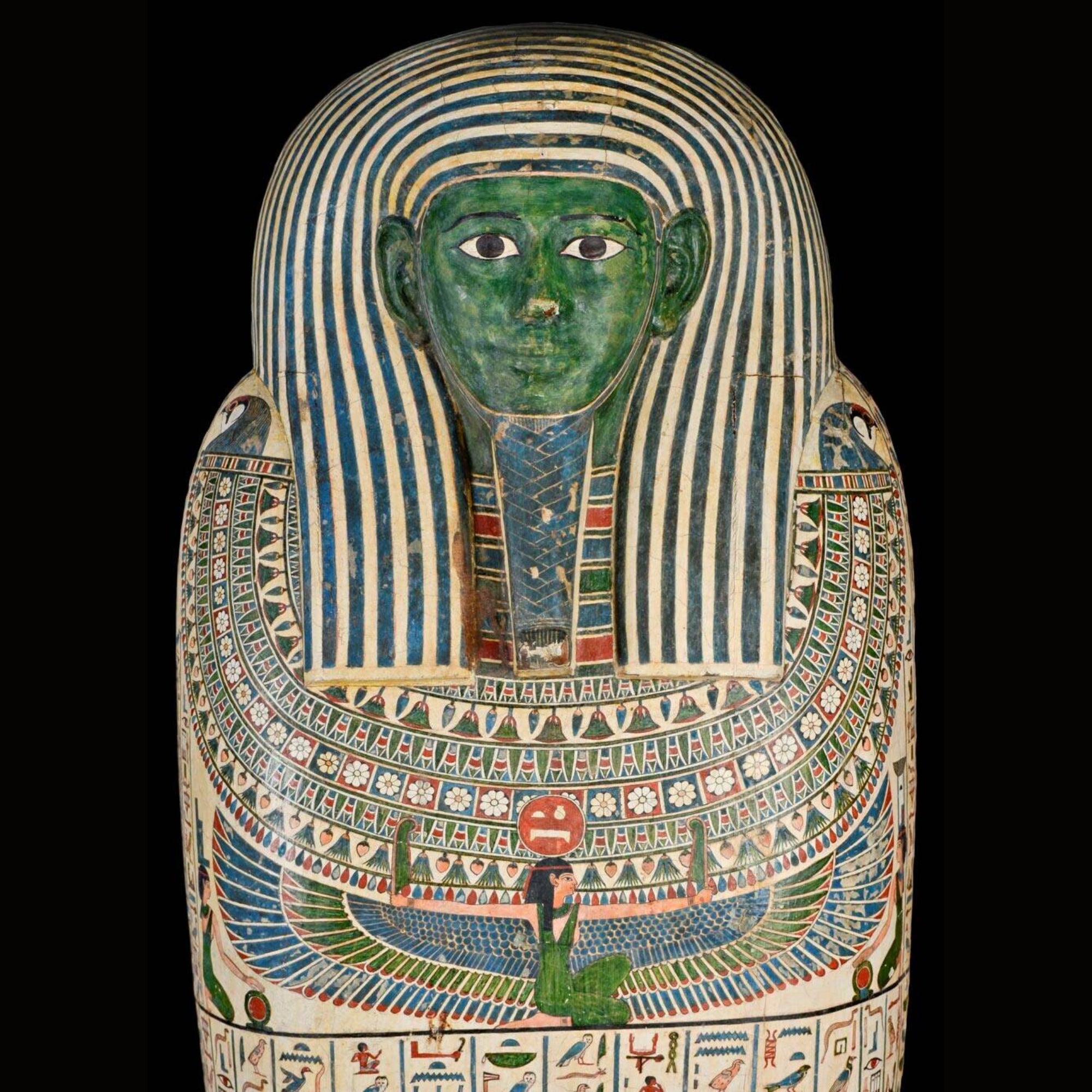
In the silence of a museum hall in Leiden rests the sarcophagus of Peftjaoeneith, a temple administrator who lived in ancient Egypt around 650 BCE. His face is painted green, the colour of Osiris. Around his body: hieroglyphs, falcons and a magnificent floral collar.
Two halls further stands a bright blue hippopotamus figurine made of faience, placed in a burial chamber along the Nile more than 4,000 years ago. Decorated with lotus flowers, the symbol of rebirth.
Each object tells a story of gods, protection and the belief that art can conquer death.
Now, thousands of years later, we bring these stories back, in collaboration with the National Museum of Antiquities.
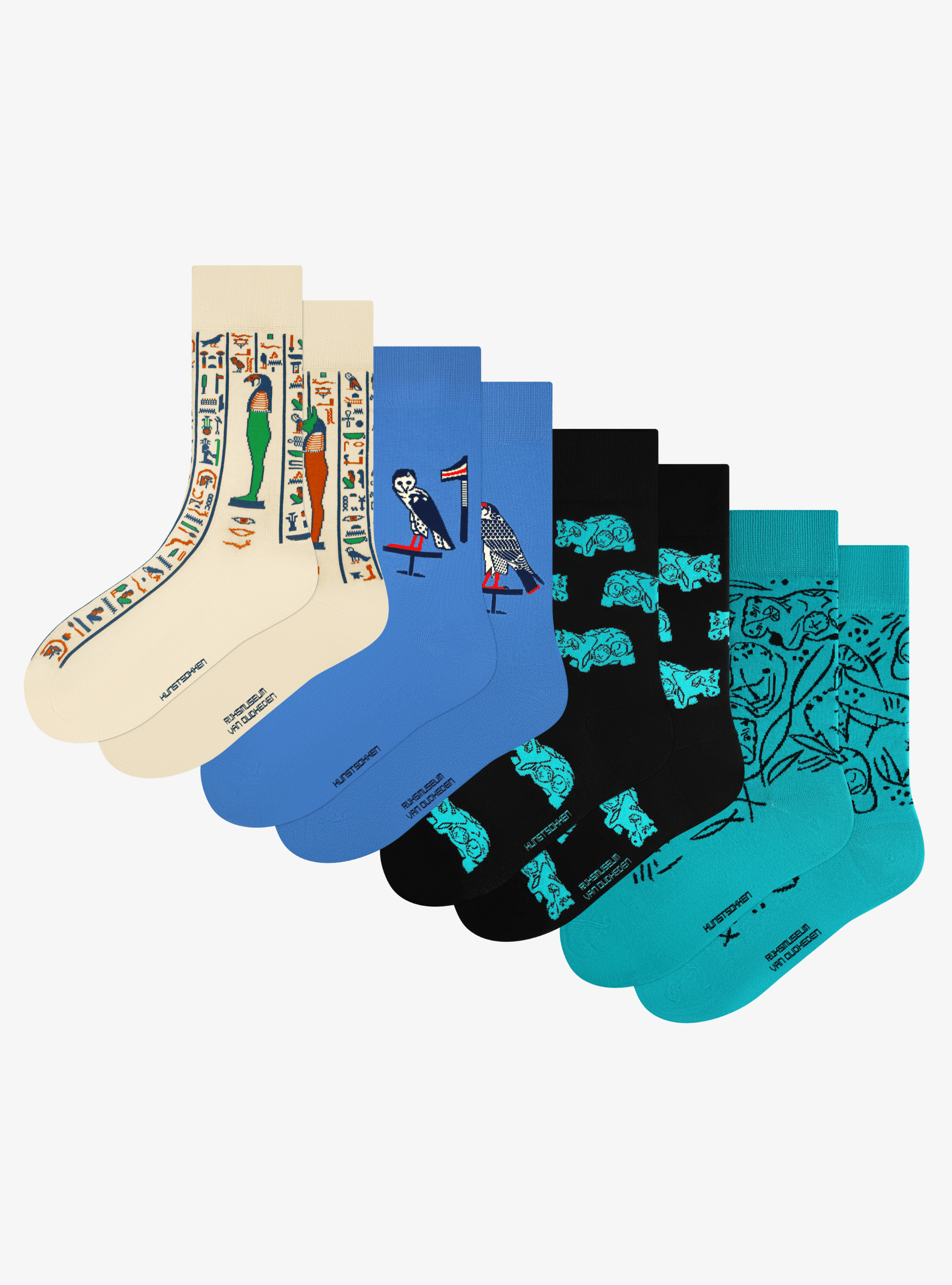
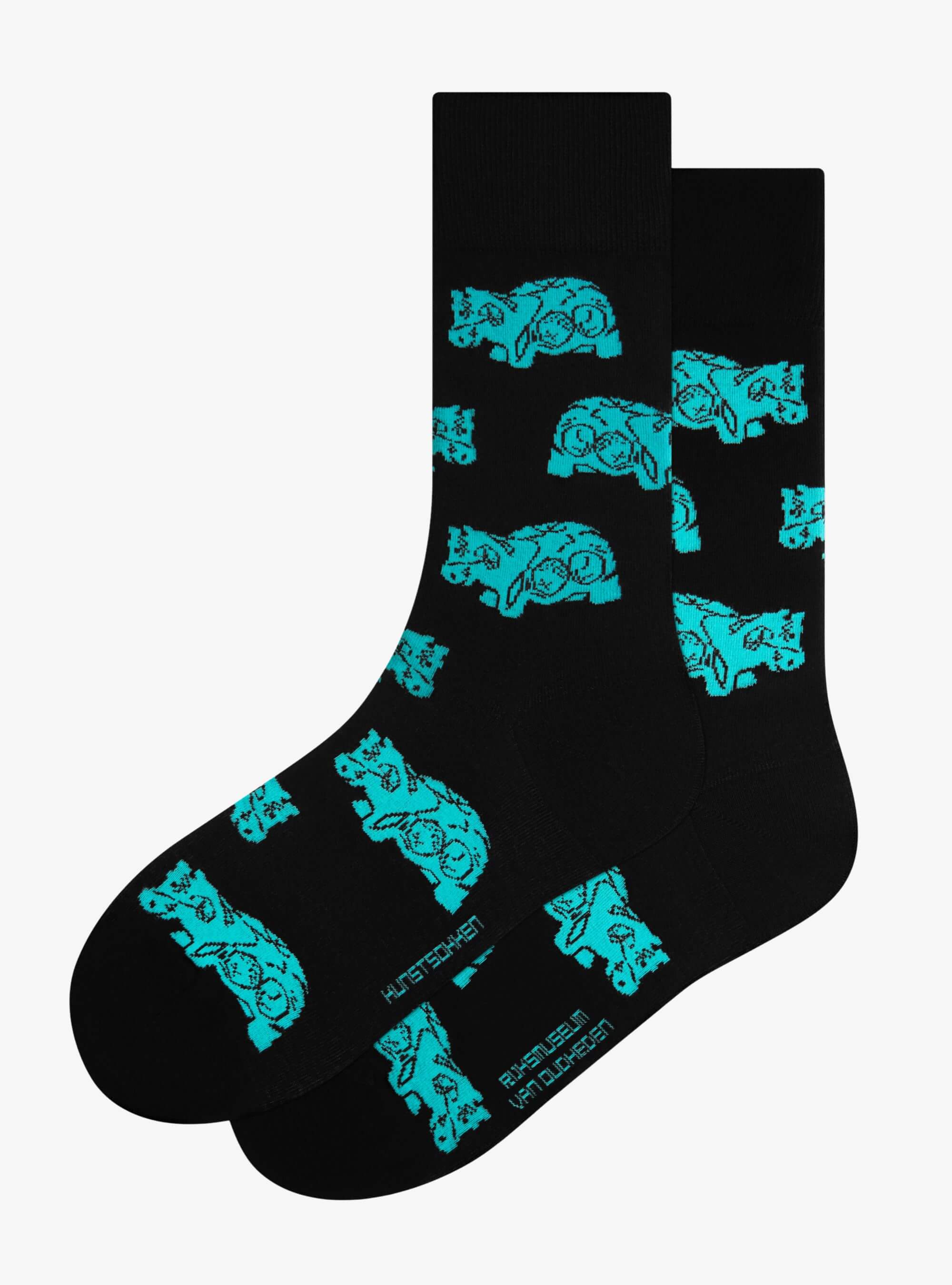
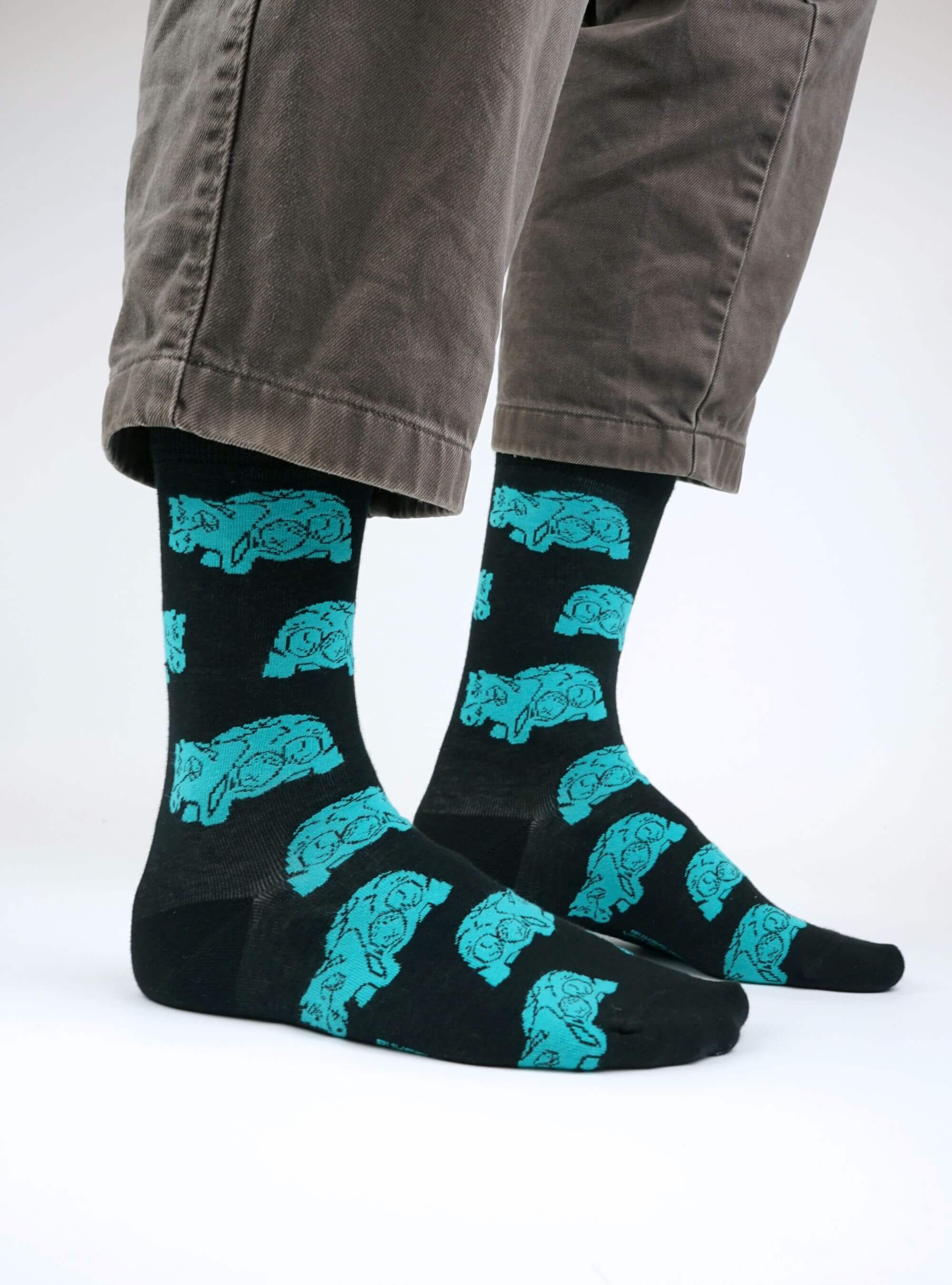
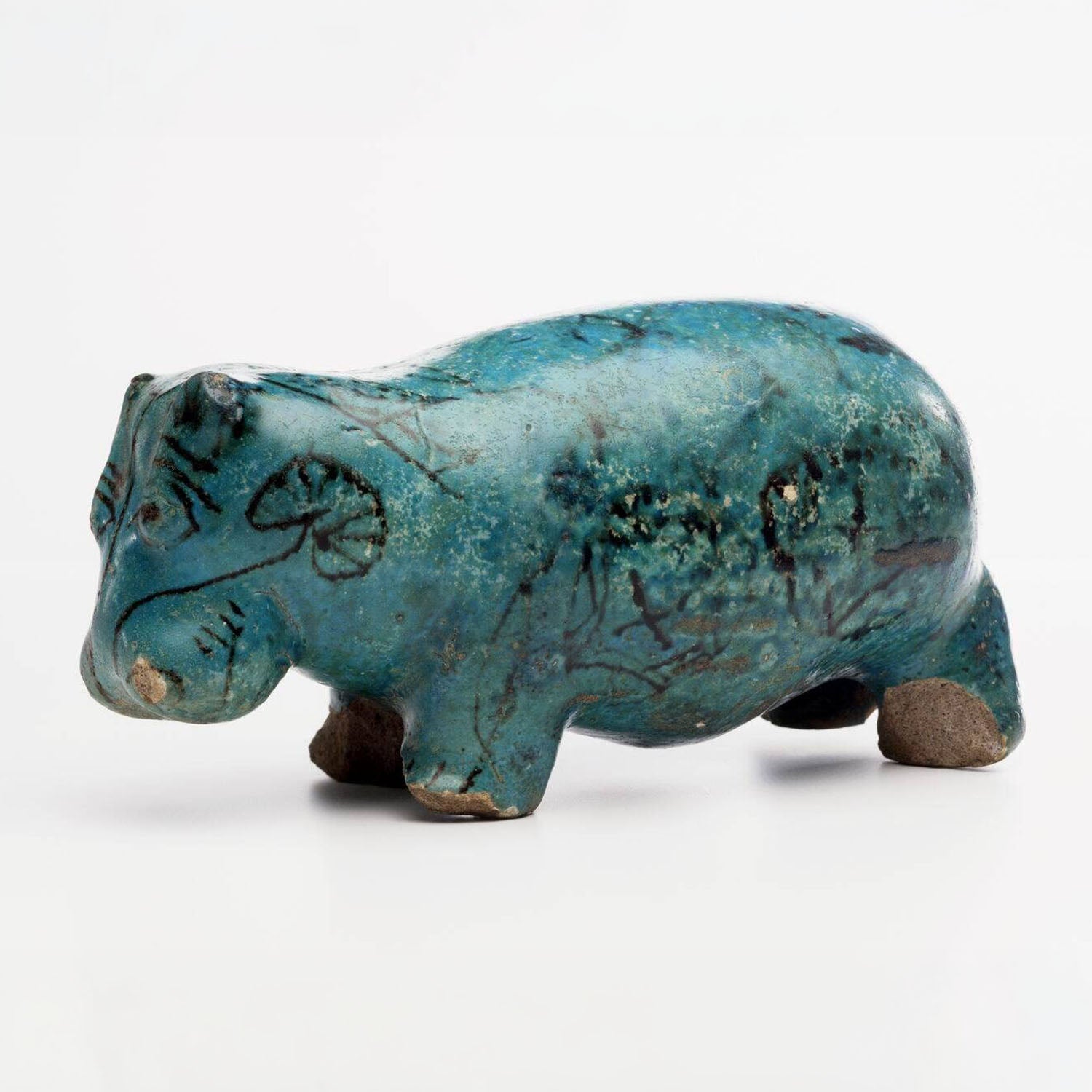
Standing Hippopotamus Figurine
A promise of rebirth
More than 4,000 years ago, this bright blue hippopotamus figurine lay in the burial chamber of a wealthy Egyptian. Made of faience, the 'plastic of antiquity', it gained its characteristic glow from copper-based materials that fused with the core during firing. On its skin: delicate lotus flowers, the symbol of rebirth. The Egyptians believed these figurines supported the eternal life of the deceased. Sometimes the legs were deliberately broken off, so the animal could not turn against them in the afterlife.
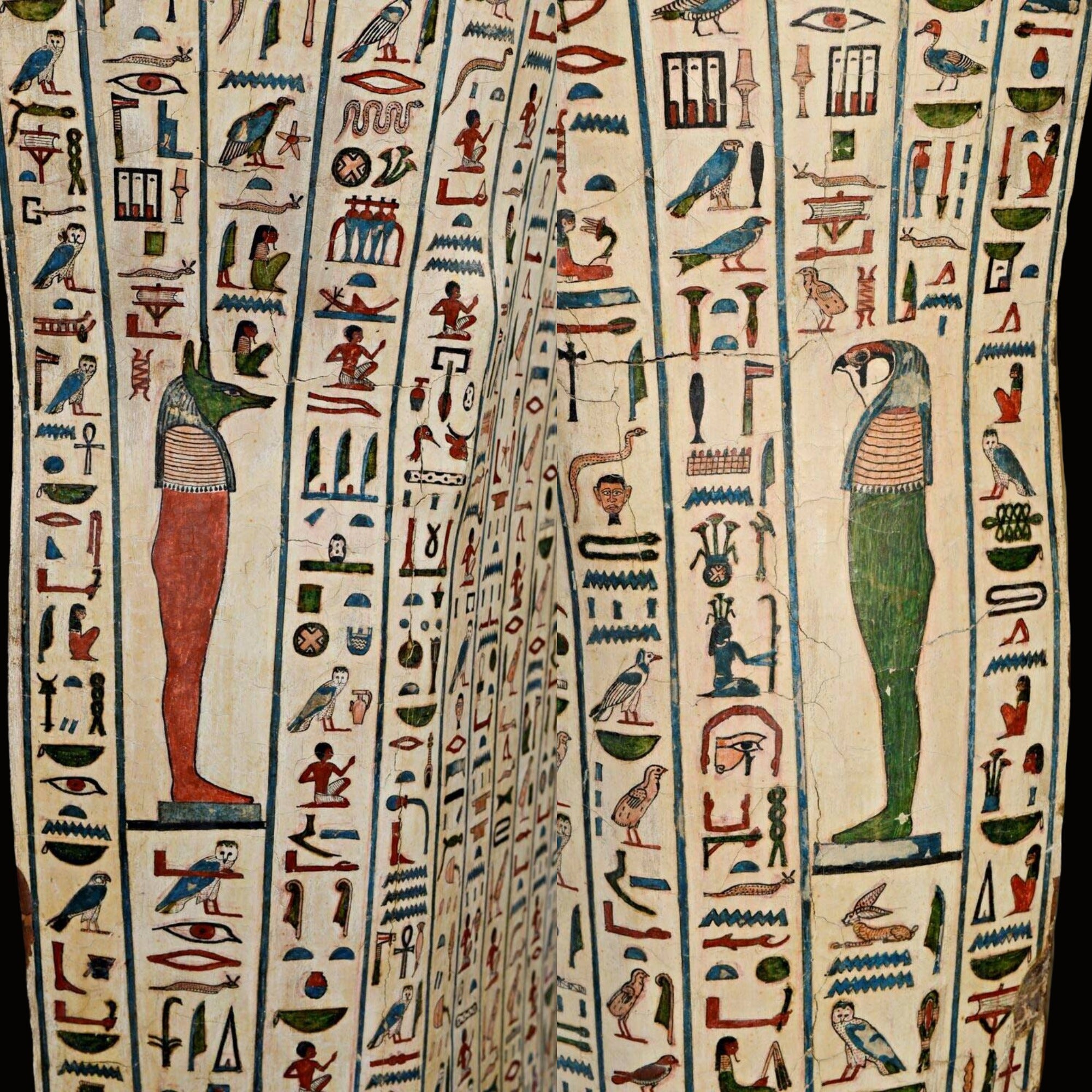
Sons of Horus
The Guardians of the Afterlife
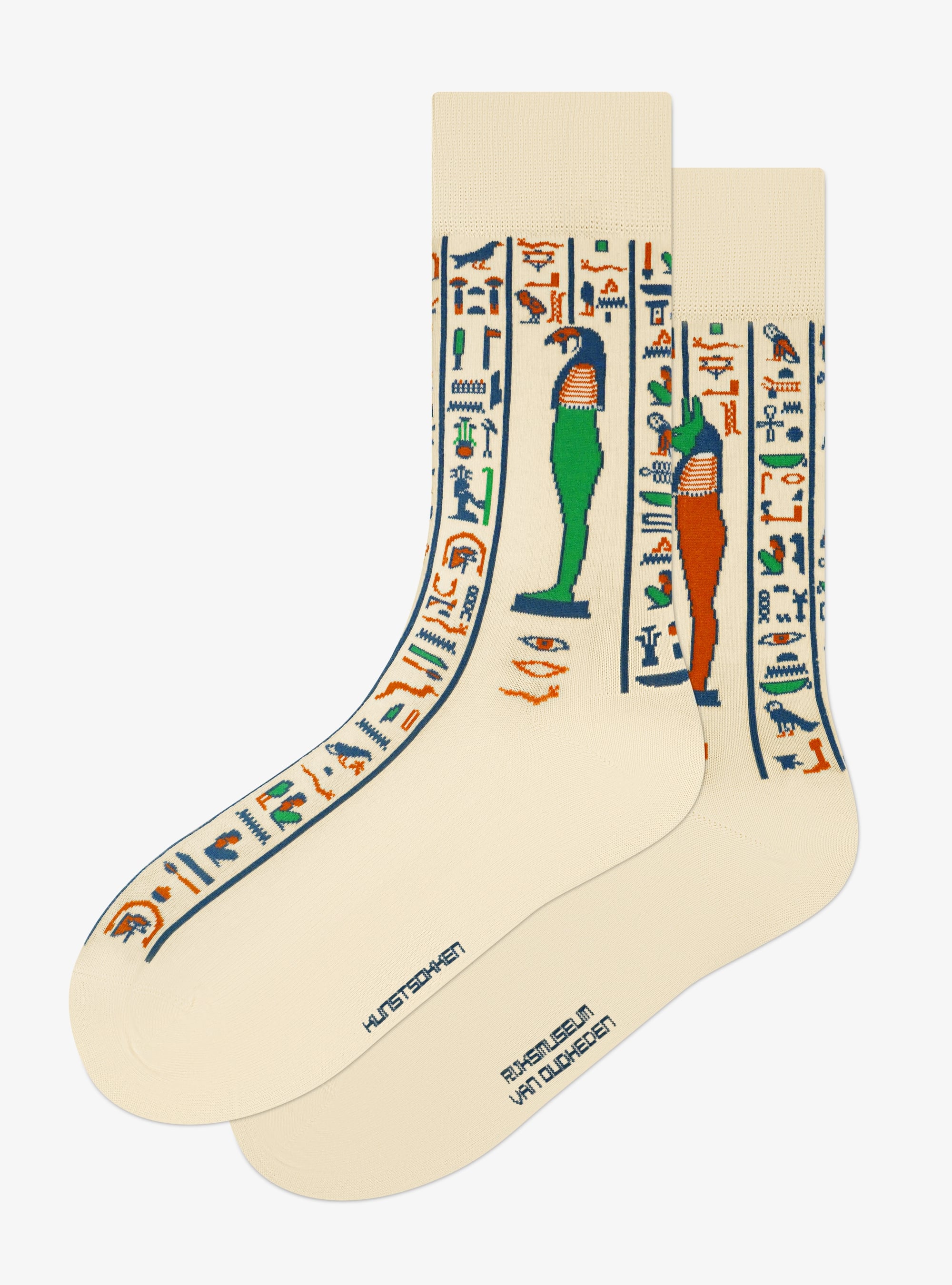
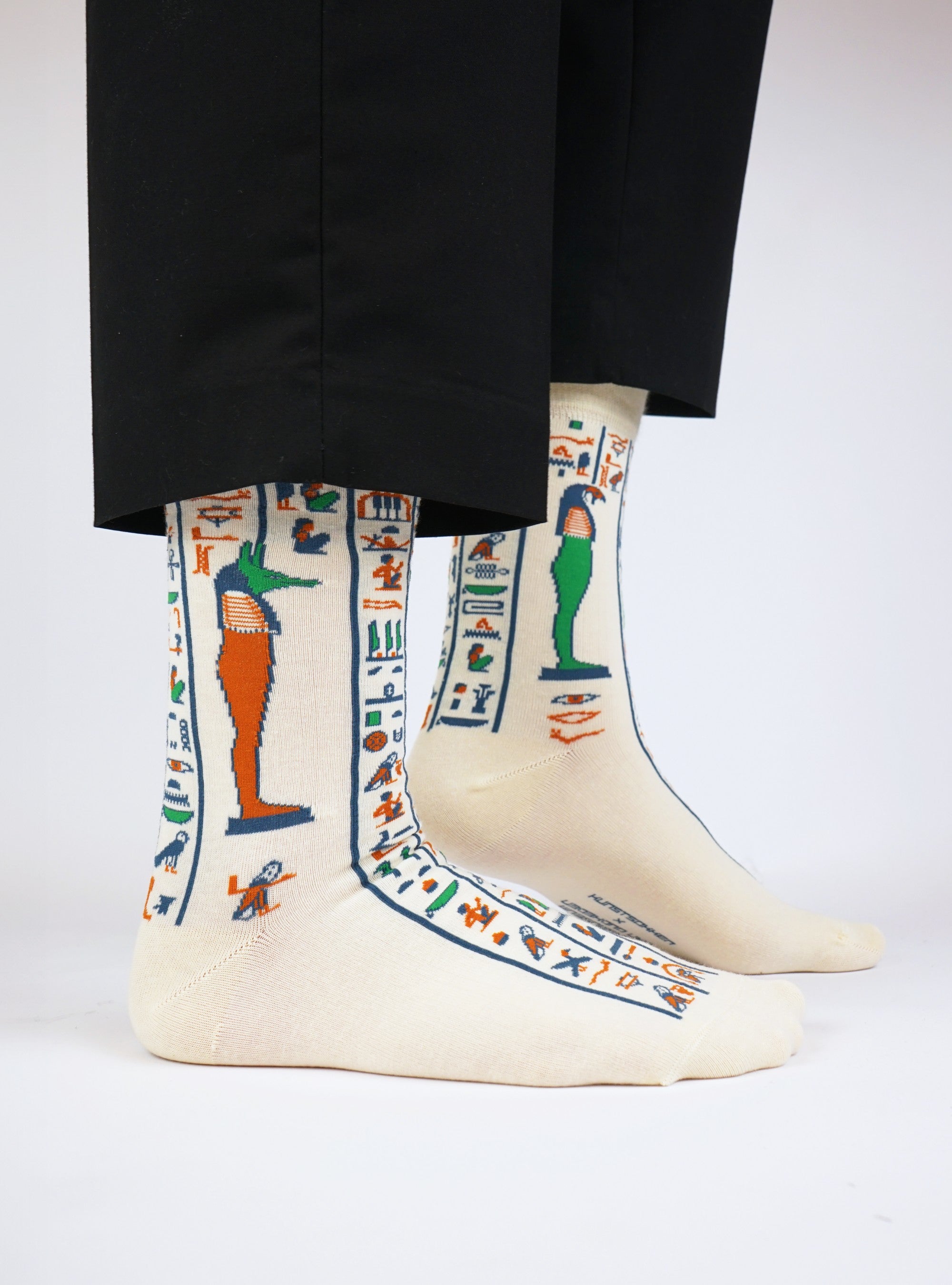
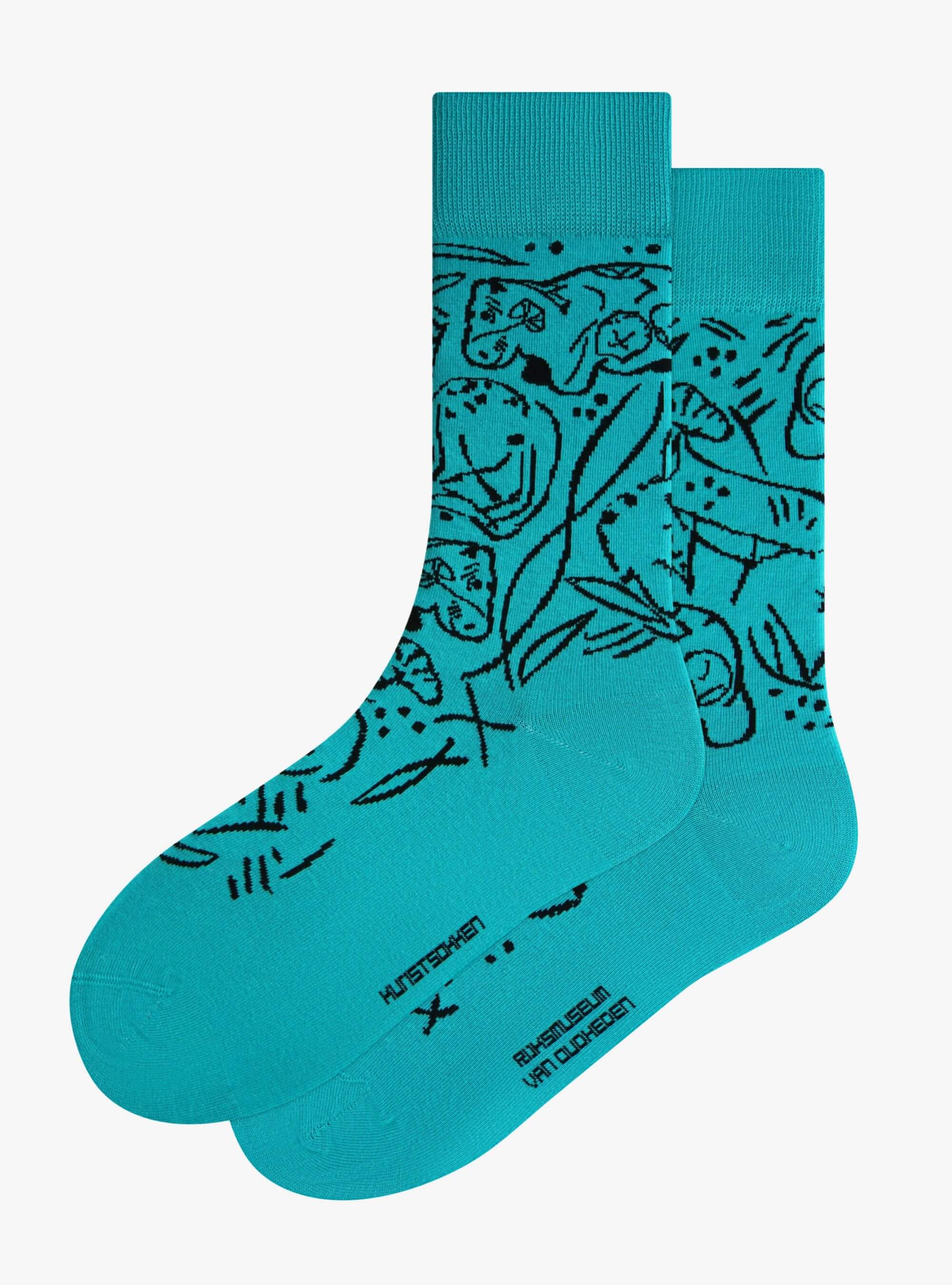
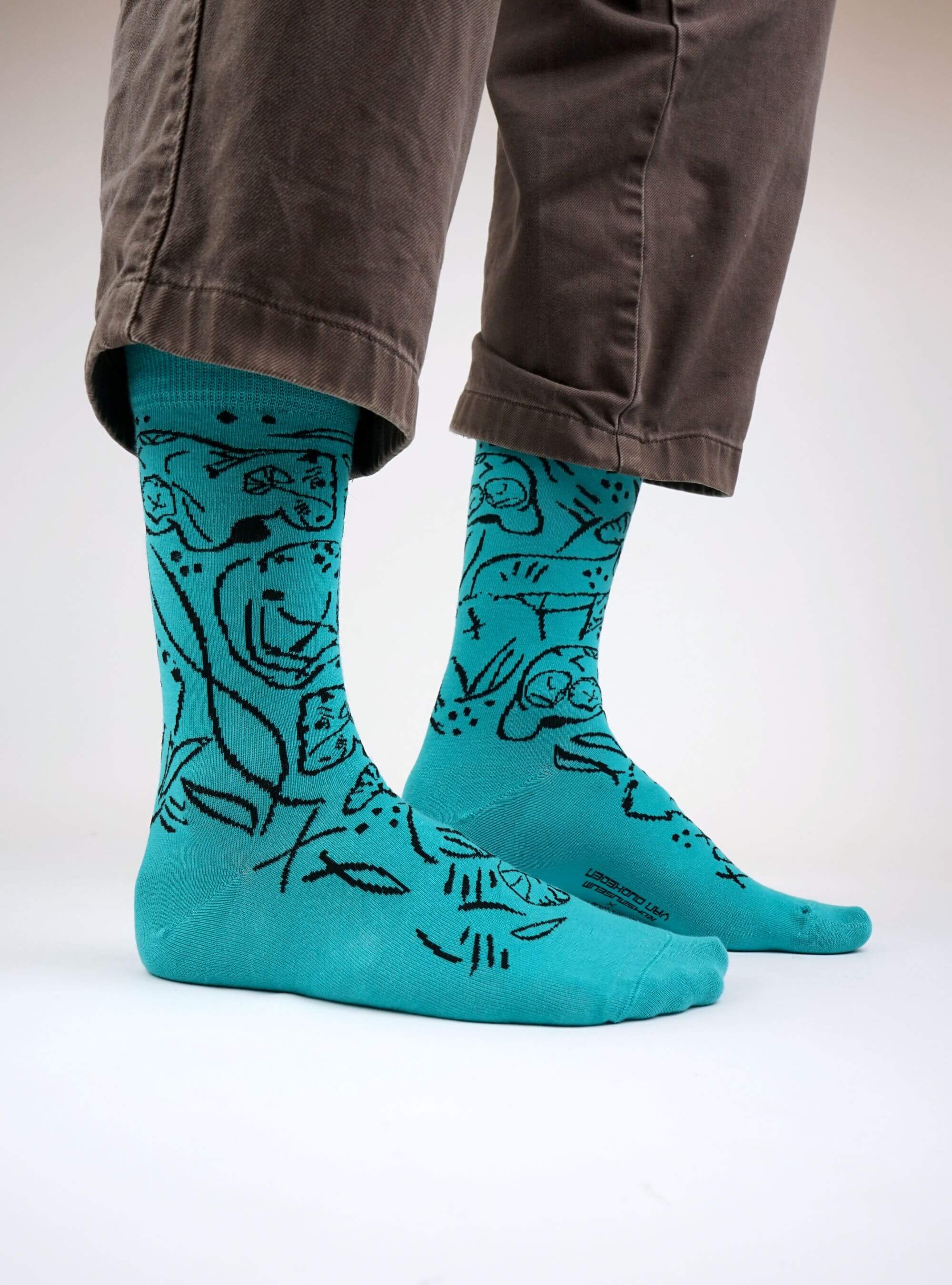
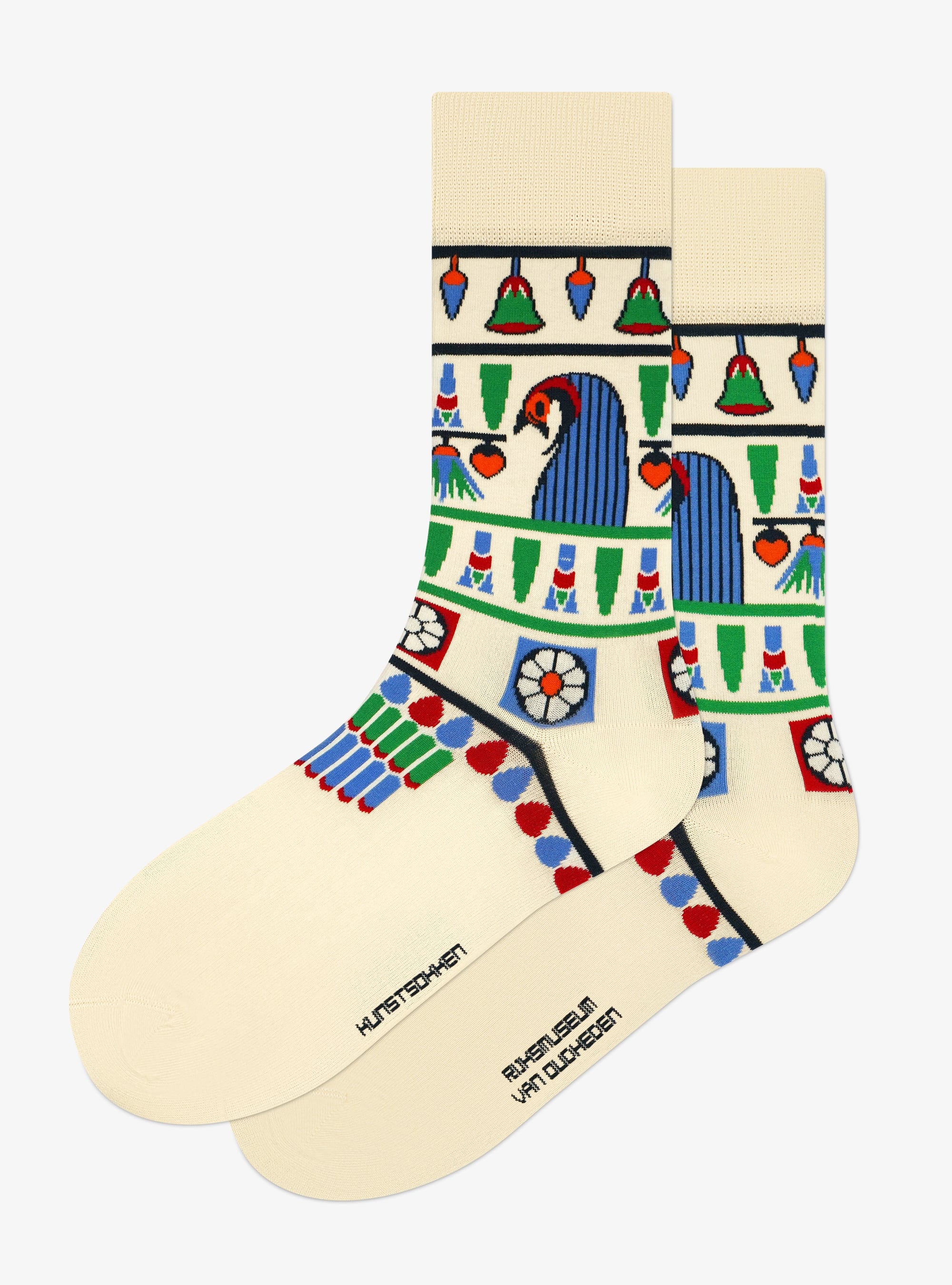
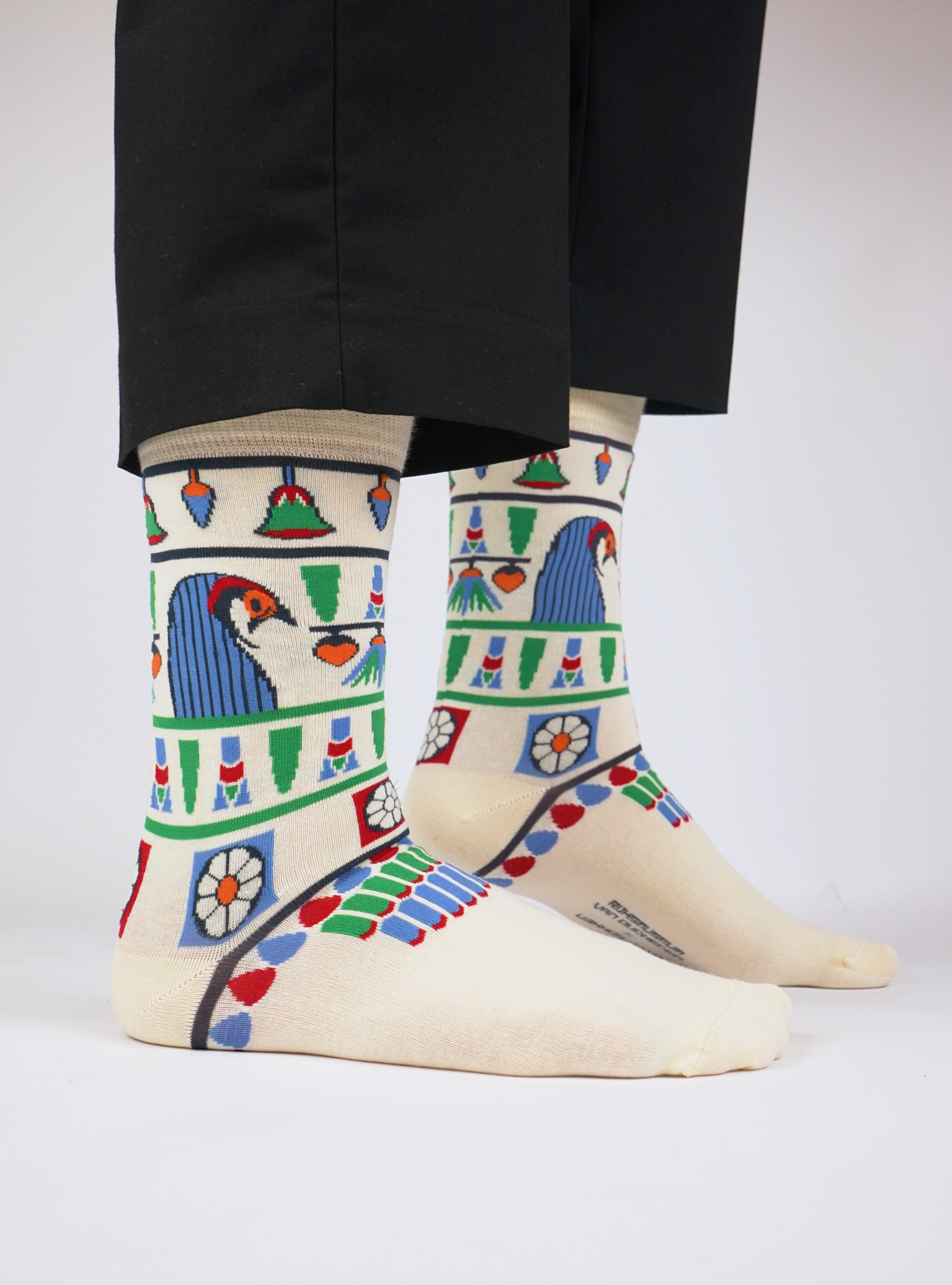
The ancient Egyptians entrusted the most vulnerable parts of the deceased to four divine brothers – the Sons of Horus. Duamutef, with his jackal head, guarded the stomach. Qebehsenuef, with his falcon head, protected the intestines. On these socks they stand exactly as they were painted on the coffin 2,600 years ago, surrounded by hieroglyphs from the Book of the Dead – spells meant to help Peftjauneith navigate safely through the realm of the dead.
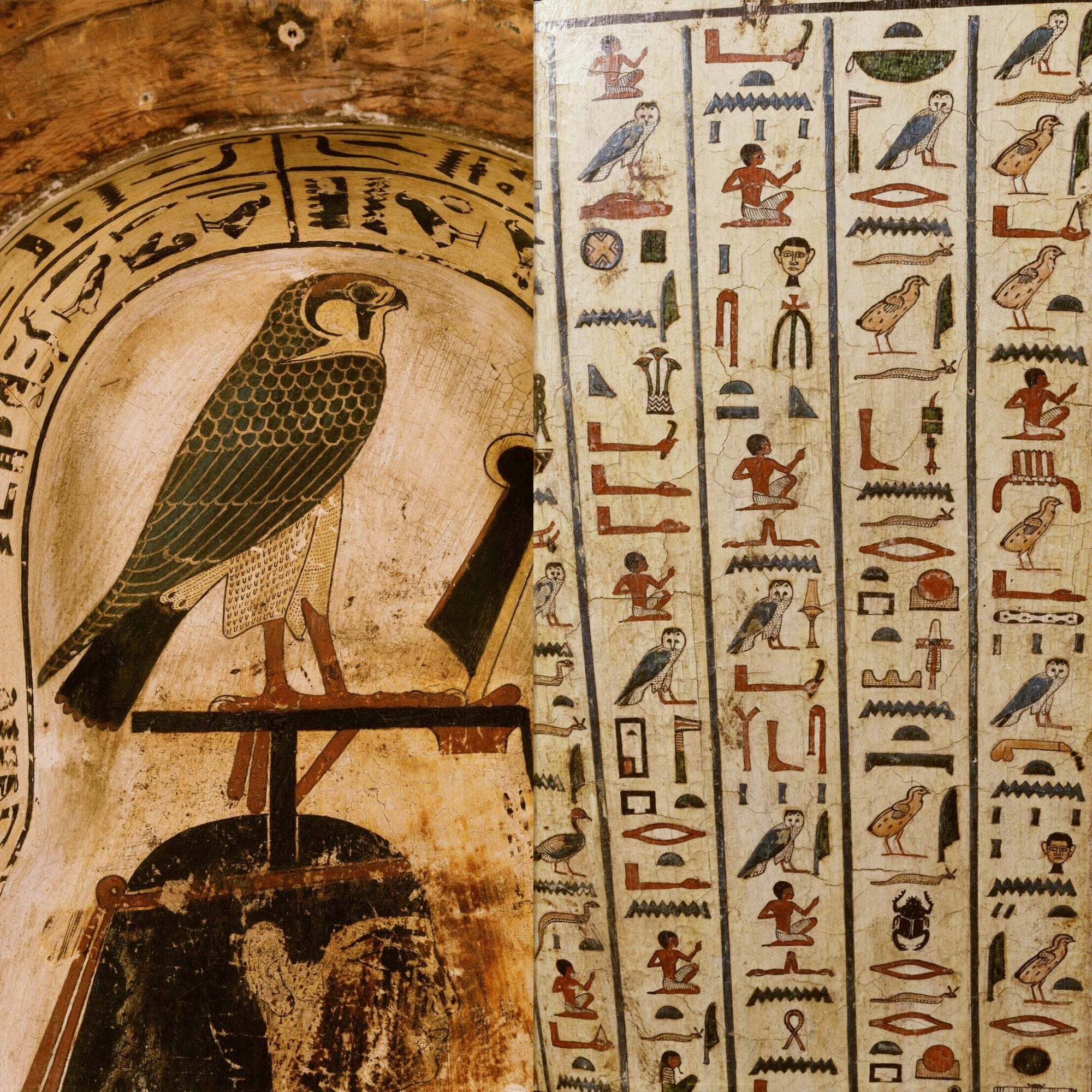
Egyptian Birds
The Language of the Gods
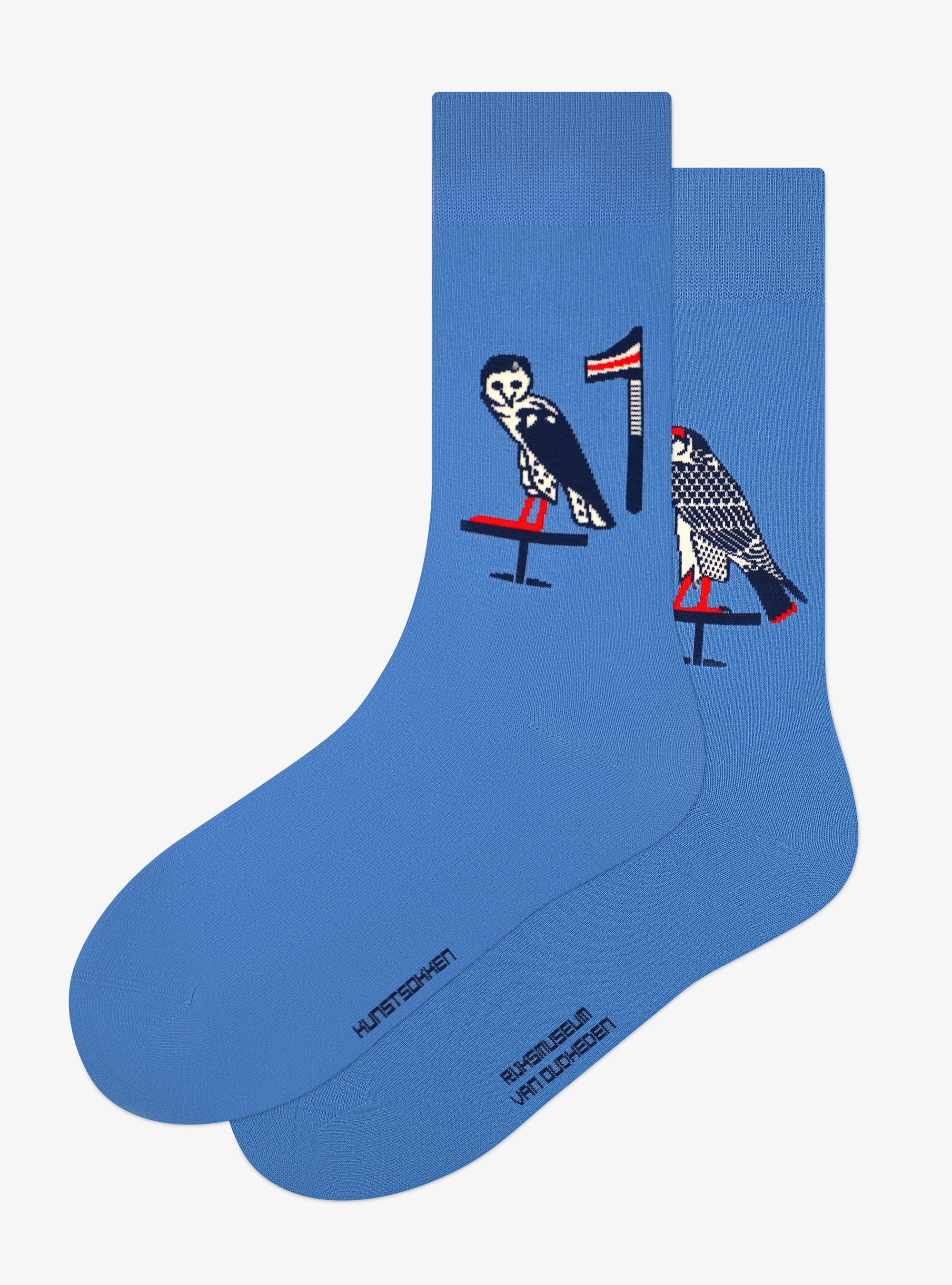
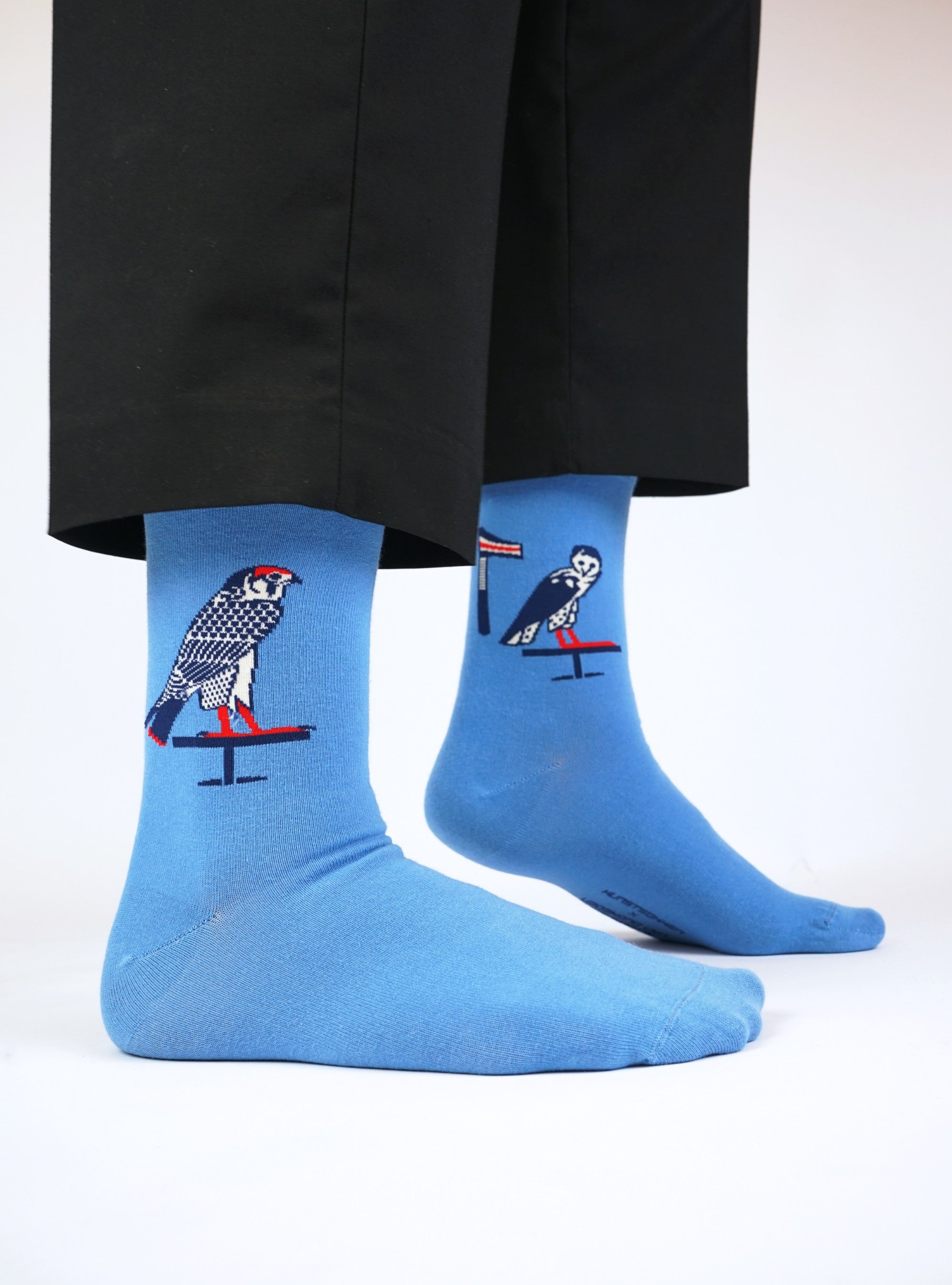
One bird is a god. The other is a letter. The falcon on this sock is Horus, son of Osiris and responsible for his father's funeral rituals. The owl beside it is the hieroglyph for the sound "-m", followed by a flagpole – the sign that stood at temples and was used to designate gods. Together they form part of the name of Atum, the creator god. This is how the Egyptians communicated: images were words, words were sacred.
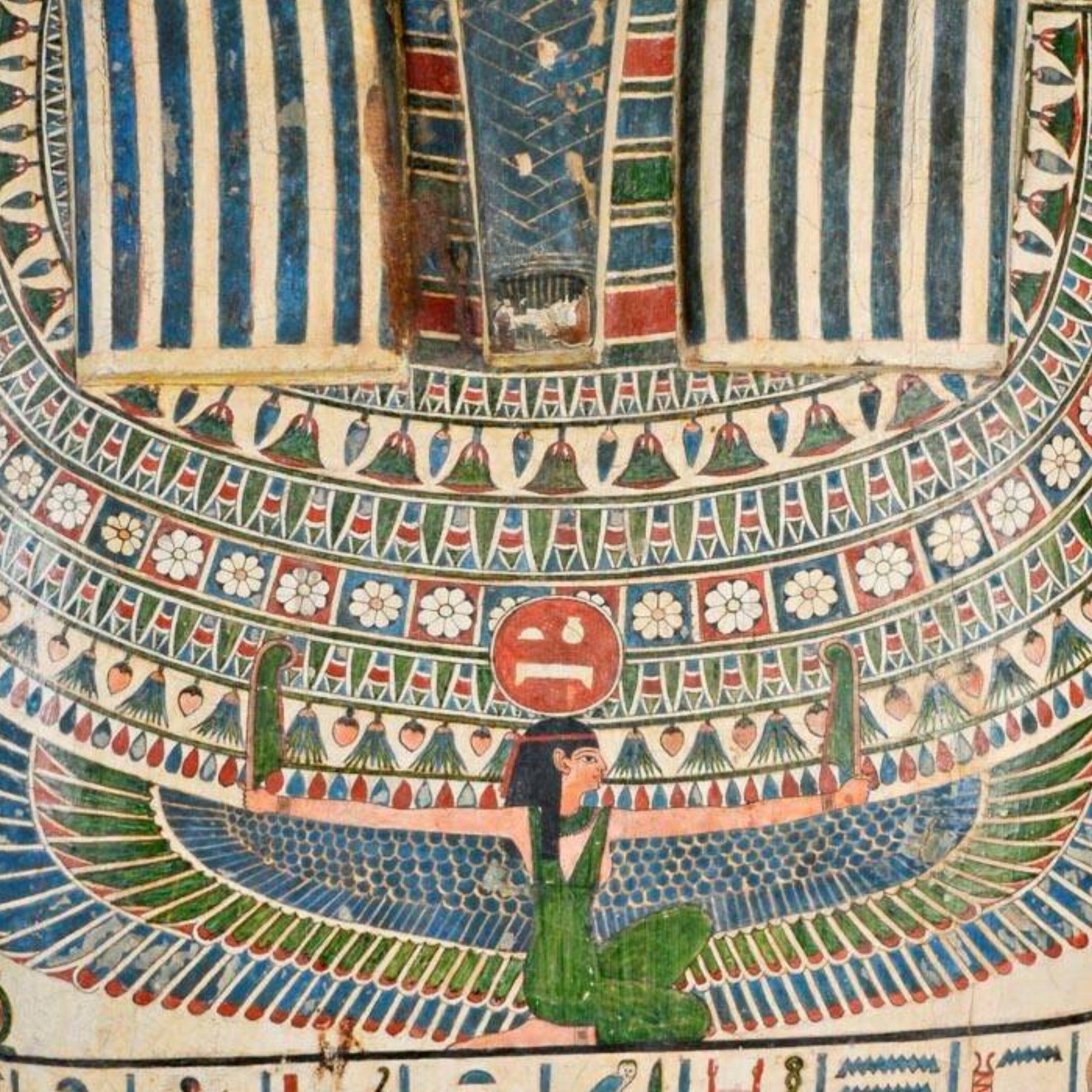
Floral Collar
The Collar That Transcends Death
The broad floral collar – 'wesekh' in ancient Egyptian – was more than jewelry. It was a protective shield that marked the transition from human to god. The falcon heads on the shoulders refer to Horachty, the sun god, or Sokar, the death god. Every layer of flowers, every geometric pattern was painted with precision as a promise: beauty protects, art conquers death. Peftjauneith wore this collar on his final journey. Now you wear the same symbols.